
01 / Vinyl
Choose the panel for the view you want to change
Start with the sightlines, not just the material. A solid vinyl privacy panel serves a different purpose from a spaced picket or rail design. Point out the neighboring windows, patio, or street you want screened and discuss the proposed height and any openings in the design. Ground clearance also matters when deciding how much screening the finished fence will provide.
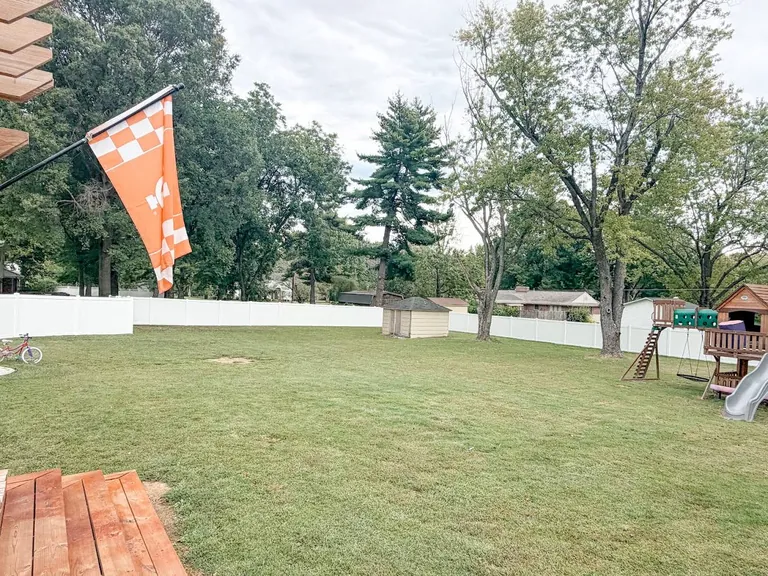
The white privacy fence pictured here is a visual starting point, not a promise that every vinyl product has the same construction. Ask which styles and colors are available for your project, how the panels and posts are assembled, and what the caps and exposed hardware will look like. Confirm the selected product and finish in writing rather than treating all white vinyl fences as interchangeable.
02 / Vinyl
Work out the grade and gate openings before installation
A sloping yard can change both the top line of the fence and the space underneath. Some systems can rack, allowing a panel to follow a slope; others may need a stepped layout or another approach. Ask what the selected product allows on your grade and where gaps beneath the fence will remain. Share survey information and point out drainage routes, trees, and changes in ground level before finalizing the run.
A matching gate needs its own plan. Discuss the clear opening for people, a mower, or other equipment, along with swing direction, ground clearance, post support, and latch access. A wide opening or a slope near the gate may affect the design. Confirm the gate framing and hardware rather than assuming a matching face means every gate is built the same way. Check any applicable HOA or permit requirements before committing to the layout.
03 / Vinyl
Keep care simple and the estimate specific
Vinyl is low maintenance, not maintenance-free. Follow the selected manufacturer’s care instructions. Routine dirt can often be removed with a garden-hose rinse and mild soap and water; use only cleaners approved for that product if a stain remains. Avoid abrasive cleaners unless the product instructions specifically allow them. Check panels, connections, and gate operation, and rinse away grass clippings and fertilizer residue rather than leaving buildup against the fence.
For a free estimate, send your city or ZIP, approximate fence run, preferred height and style, and the number of gates. Photos can help explain the yard. Ask the quote to name the vinyl product, color, panel design, posts, gate construction, and hardware. Clarify slope-related work, access needs, and whether old-fence removal and disposal are included. A like-for-like scope makes different proposals easier to compare.
Useful answers
Questions before you call.
Does every vinyl fence provide full privacy?
No. Solid panels, spaced pickets, and rail designs screen views differently. Discuss the specific layout, height, decorative openings, and ground clearance against the views you want to block.
Can vinyl fencing follow a sloping yard?
It depends on the selected system and the grade. Ask whether the panels can rack to follow the slope or need a stepped arrangement, and what that means for the top line and gaps beneath the fence. Plan gate clearance separately.
What should I use to clean a vinyl fence?
Start with the manufacturer’s instructions for your product. A garden hose and mild soap and water are common options for routine dirt. For heavier stains, check approved cleaners rather than using an abrasive product or strong chemical by default.